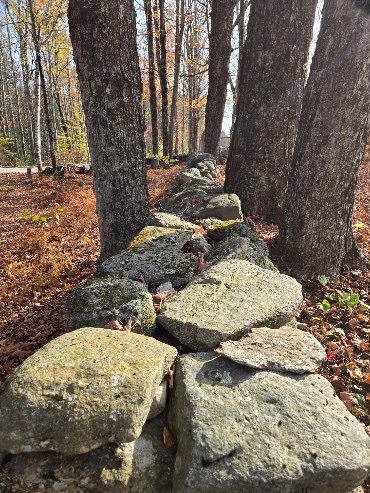
This morning I discovered that the Town of Cumberland, Rhode Island is seeking a consultant to help them do a “Historic Stone Wall Inventory” of their lovely town. Importantly, this project is funded by the state of Rhode Island Historical Preservation & Heritage Commission (RIHPHC) through its Certified Local Government Grand Program, which distributes federal funds on behalf of the National Park Service and the U.S. Department of the Interior. To my knowledge, this is the first time the essence of the Manual for the Inventory and Description of Stone Walls is being put into practice by a government entity, though land trusts and private landowners have been doing this the past year. I have long advocated for such an inventory on local, state, land-trust, and federal properties, and hope to help them, either officially or unofficially. This will culminate four years of raising attention via a 2023 article in Smithsonian, publishing a 2024 vetted classification and nomenclature in Historical Archaeology, publishing a 2025 stepwise process for conserving walls in the The Public Historian (both peer-reviewed scholarly journals), and posting the Manual for Inventory and Description on the SWI website last year. Access to these resources is within the Manual.
The town’s Request for Qualifications was launched by former Town Planner Abigail McVeerey, who consulted with me last year when writing her successful grant proposal before she changed jobs. Its specifications for ground-truthing, classification, age-groupings, and the inclusion of ecological criteria broadly parallel those of the Manual.
I wish them the best of success. I hope this is the start of a trend that continues for decades.